
What Is Dungeons and Dragons Therapy, and Could It Actually Help You?

Published by Olympic Psychology Services | olypsych.com
If someone told you that rolling a twenty-sided die could help you work through anxiety, build social confidence, or process trauma, you'd probably raise an eyebrow. Fair enough. It sounds a little out there. But Dungeons and Dragons therapy, sometimes called therapeutic D&D, therapeutic table top gaming, or tabletop role-playing game therapy, is a real clinical approach backed by research, and it's helping people in ways that more traditional methods sometimes can't quite reach.
At Olympic Psychology Services, we offer D&D therapy as part of our group and individual services. We've seen firsthand what can happen when people give themselves permission to be someone else for an hour and end up learning something true about themselves.
Here's what it actually is, who it's for, and why it works.
So What Exactly Is D&D Therapy?
Dungeons and Dragons therapy, or D&D therapy, is shorthand for using table top games as a way to further a therapeutic goal. Dungeons and Dragons is probably the most popular table top game of the past several decades, but other games can be and are used (such as Pathfinder or Blades in the Dark) as well. The structure of a tabletop roleplaying game is the vehicle for therapeutic work. A licensed clinician runs the session as both a clinician and a Dungeon Master. Clients create characters, go on collaborative adventures, face challenges, make choices, and interact with a world built specifically to create therapeutic opportunities.
It's not just playing a game in a therapist's office. The scenarios, the characters, and the narrative are all intentionally designed to work on real therapeutic goals: emotional regulation, social skills, cognitive flexibility, processing fear, building self-worth, and practicing communication.
Think of it as therapy that meets people where they actually are, rather than asking them to sit across a desk and talk about their feelings on command.
What Does the Research Say?
This isn't just a fun idea therapists had (although it's also a lot of fun). There's a growing body of evidence behind it.
A 2024 study published in Medical Xpress covering research out of James Cook University found that participants in D&D-based group therapy showed significant reductions in depression, stress, and anxiety, along with meaningful increases in self-esteem and self-efficacy. A 2024 paper in Frontiers in Psychiatry outlined a formal treatment framework for using tabletop RPGs as a mental health intervention, borrowing from Cognitive Behavioral Therapy and social skills training.
The American Psychological Association highlighted roleplaying games as an emerging therapeutic tool in 2025, noting their effectiveness across a range of presentations including anxiety, ADHD, trauma, and social difficulties.
Research published in the Journal of Creativity in Mental Health found that D&D facilitates higher levels of empathy, improved ability to consider group needs, greater moral reasoning, and better success in maintaining friendships. For people who struggle to connect with others, those aren't small gains.
Who Is D&D Therapy For?
More people than you'd expect. Here are the groups where it tends to be especially impactful.
Teens and Young Adults Who Resist Traditional Therapy
A teenager who shuts down the moment you ask "so how are you feeling?" will often open right up when making decisions for their character facing a difficult situation. The game creates a kind of side door into therapeutic conversation. The distance of fiction makes it safer to explore real things.
People with Social Anxiety
The structured, collaborative nature of D&D gives socially anxious people a defined role, a clear purpose, and a reason to interact. You're not just sitting in a room trying to make conversation. You're solving a problem together with your party. Research shows statistically significant reductions in anxiety and avoidance after TTRPG-based group therapy, with strong effect sizes.
People with ADHD
The immersive quality of a good D&D campaign is something people with ADHD often describe as one of the few contexts where their hyperfocus becomes a superpower rather than a problem. The game rewards creative thinking, quick associations, and out-of-the-box problem solving. It also builds executive function skills like planning and turn-taking in a context that actually holds attention.
People with Autism
Roleplaying games have a built-in social structure: clear rules, defined roles, predictable turn sequences, and a shared narrative that gives conversations a purpose and a frame. For many people on the spectrum, that structure makes social interaction accessible in a way it often isn't in unscripted real-world settings. Multiple studies have found improvements in communication, friendship quality, and quality of life for people with autism who engage in therapeutic roleplaying.
People Processing Trauma, Grief, or Major Life Changes
One of the therapeutic concepts central to D&D therapy is the idea of "bleed," which refers to the way emotions and experiences cross between the game world and real life. A character who loses someone in the game might help a player process their own grief. A character who stands up for themselves against an unjust authority might help someone find their own voice. The protective layer of fiction creates enough safety to approach things that might otherwise feel too raw to touch directly.
Adults Who Feel Stuck in Regular Talk Therapy
This one surprises some people. D&D therapy isn't just for kids and teens. Many adults find that a more experiential, narrative-based approach unlocks things that years of traditional therapy haven't. If you've ever felt like you're going through the motions in a therapy session, talking about problems without anything shifting, this might be worth exploring.
What Does a Session Actually Look Like?
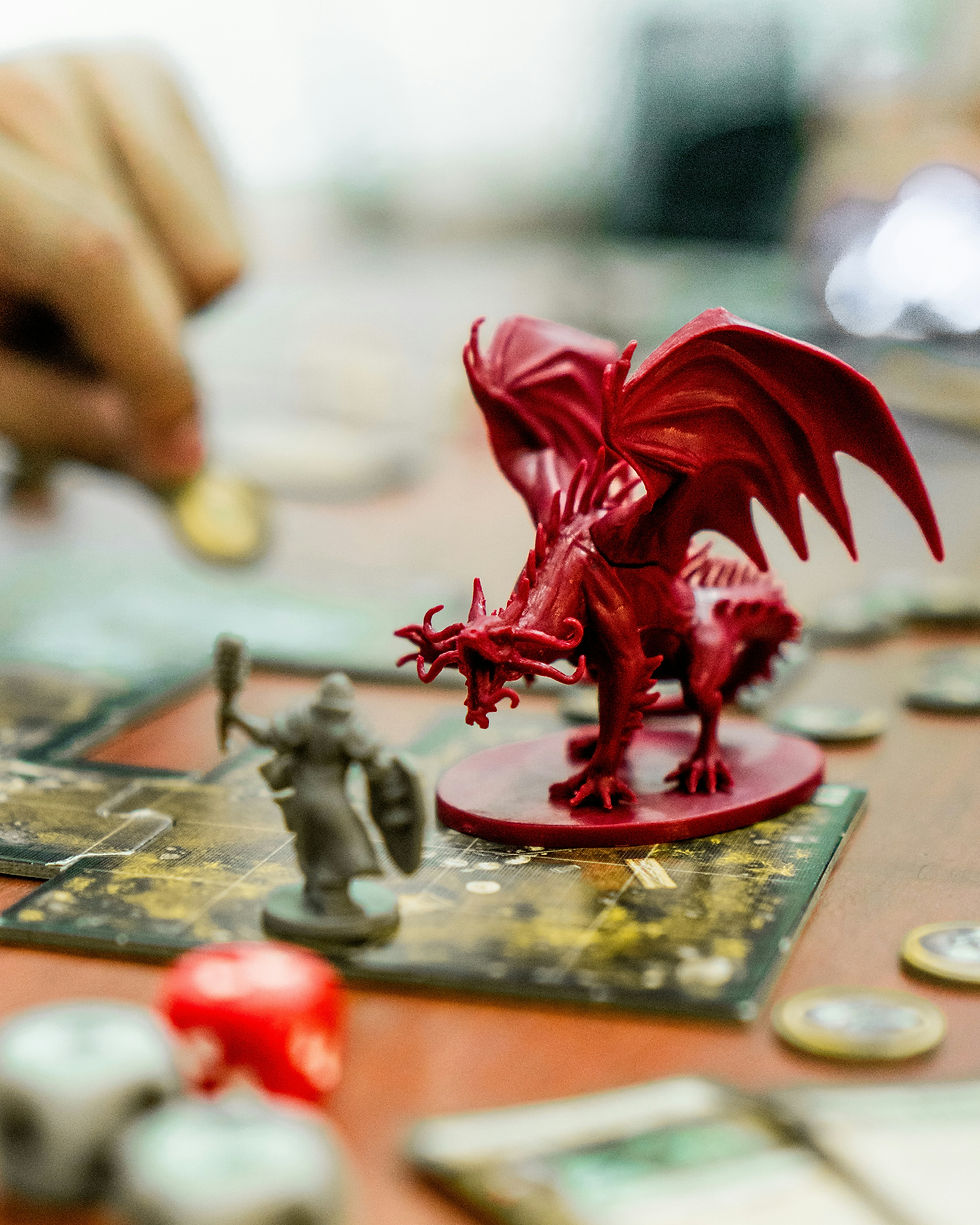
A therapeutic D&D session looks a lot like a regular game session, with dice, character sheets, a Dungeon Master describing scenes, and players making choices. The difference is that the therapist is always holding both roles at once.
The therapist designs the world and its challenges with your therapeutic goals in mind. If you're working on setting boundaries, you'll encounter situations in the game that call for exactly that. If you're building confidence, your character will face moments that require courage. The debrief at the end of a session, where you talk about what happened and what choices you made, is where a lot of the explicit therapeutic work happens.
In group settings, the party dynamic itself becomes part of the therapy. Learning to collaborate, communicate across differences, and trust and be trusted, all of that unfolds naturally and becomes material to work with.
Sessions are run by a licensed mental health professional. This isn't a gaming group with a therapist in the corner. It's a therapy modality, like CBT or EMDR, but using the game as its primary tool. It can be difficult to hold both roles at once, and there is a lot for the Clinical Dungeon Master to keep track of, that's why Olympic Psychology Dungeon Masters all go through specialized training and certification above and beyond their training for their clinical expertise.
What D&D Therapy Is Not
D&D therapy is not a replacement for medication management, crisis intervention, or other clinical services that some people need. It's one modality among many, and a good therapist will help you figure out whether it's the right fit for your situation. It's a fantastic (and fantastical) tool, but it is one amongst many and no one tool is best for all situations.
It's also not something you have to already love D&D to benefit from. Most people who come to D&D therapy have never played before. You don't need to know what a saving throw is or have opinions about which edition is best. You just need to be willing to try something a little different.

Why We Offer It in Olympic
Washington has a strong, creative culture, the Seattle and Tacoma area specifically has a community of people who are curious, open-minded, and often willing to try something a bit different. D&D therapy fits right in here. It respects people's intelligence, meets them in a space that feels natural, and takes therapeutic goals seriously without taking itself too seriously. It’s also a lot of fun, and people that get involved usually end up loving table top games for the long ru
n.
We've found it to be one of the most effective tools we have for reaching people who might not otherwise get support, and for going deeper with people who are already committed to their growth.
Ready to Learn More?
If any of this resonated, whether for yourself, your teenager, or someone you care about, we'd love to talk. D&D therapy groups at Olympic Psychology Services are run by licensed clinicians in a welcoming, low-pressure environment. No experience required. Just a willingness to roll the dice. We also have online games coming soon, so if you can’t make it to the table, you can still be on the team.
Contact us at olypsych.com to ask about current group openings or to schedule a consultation.
Olympic Psychology Services provides therapy, assessment, and psychological services in person in Tacoma, Washington and online to all of Washington State. We specialize in evidence-based approaches including marriage and family therapy, individual therapy, psychological assessments, and experiential modalities like Dungeons and Dragons therapy.

